
How Much House Can I Afford? Approved vs. Comfortable
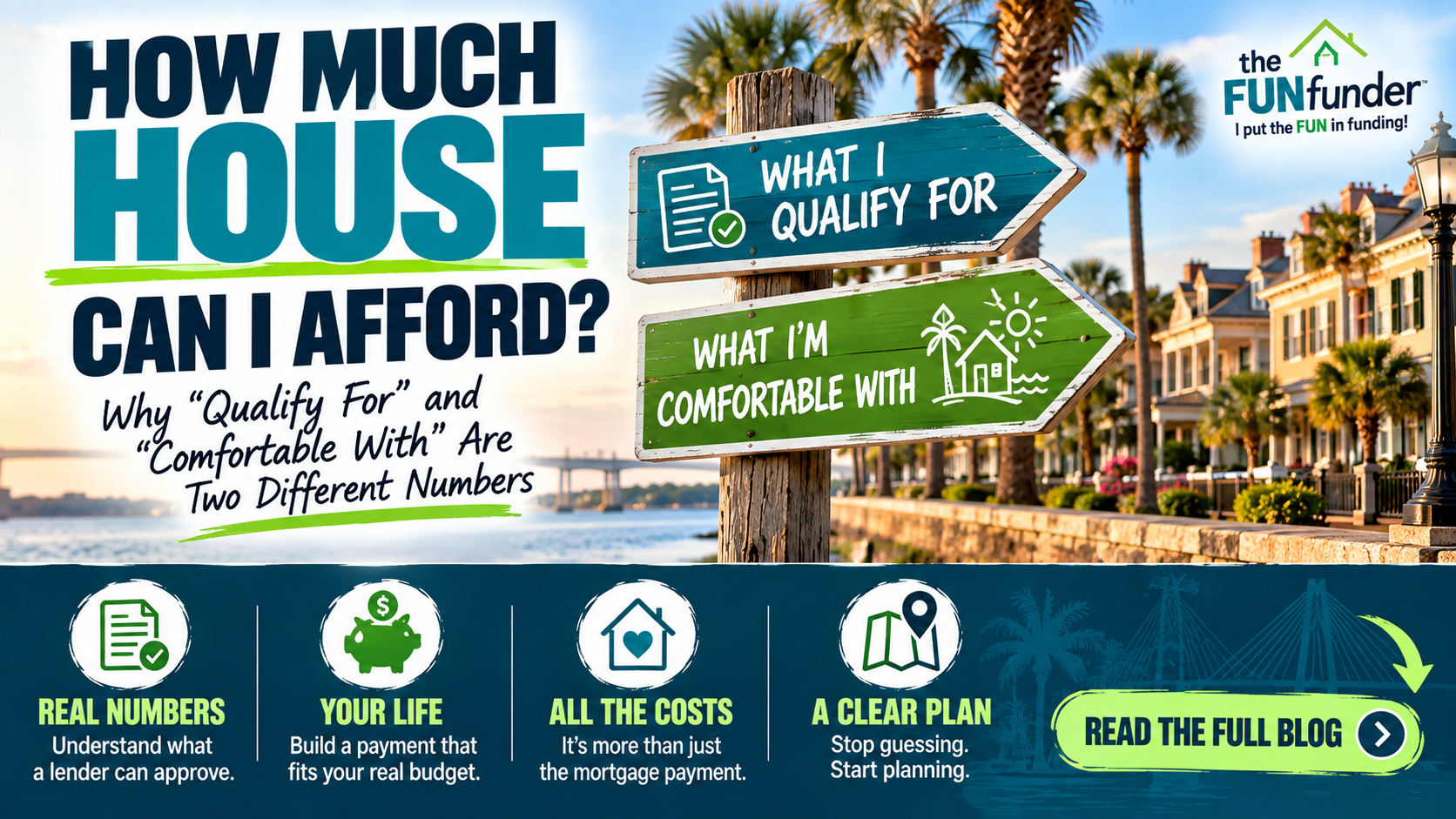
How Much House Can I Afford? What You Qualify For vs. What You Can Comfortably Pay
Just because a lender says you CAN buy a $500,000 house doesn't mean you SHOULD.
Wait a minute. Did a mortgage guy just tell you not to spend more money on a house?
Yep. Sure did.
And here's why.
One of the biggest mistakes I see homebuyers make is assuming their mortgage preapproval amount is also their ideal homebuying budget.
They're not necessarily the same thing.
In fact, when someone asks me, "Josh, how much house can I afford?" my answer usually starts with another question:
"How much are you actually comfortable spending every month?"
Because there are two very different numbers we need to figure out before you start shopping.
And understanding the difference could save you a whole lot of financial stress down the road.
1. How much house can you qualify for?
This is what I call your qualification number.
When a mortgage lender reviews your application, we're looking at things like:
Your gross monthly income
Your monthly debt obligations
Your credit history and credit scores
Your available funds for down payment and closing costs
The loan program and property you're considering
One of the big factors is something called your debt-to-income ratio (DTI).
In plain English, DTI compares certain monthly debt payments—including your proposed housing payment—to your gross monthly income.
Depending on the mortgage program, that ratio helps determine how much financing you may qualify for.
But here's the important part.
A lender's calculation doesn't necessarily reflect everything you spend money on.
Groceries? Not typically part of DTI.
Daycare? Generally not counted as a monthly debt in standard DTI calculations.
Vacations? Nope.
That expensive coffee habit you swear you're going to cut back on?
Yeah, we're not calculating that either. 😂
The lender is evaluating your ability to meet the loan's qualifying requirements.
We're not deciding whether you should cancel your family vacation, give up date nights, or spend every weekend eating ramen noodles.
That's a different conversation.
And frankly, it's one I think more buyers should have.
2. How much house can you comfortably afford?
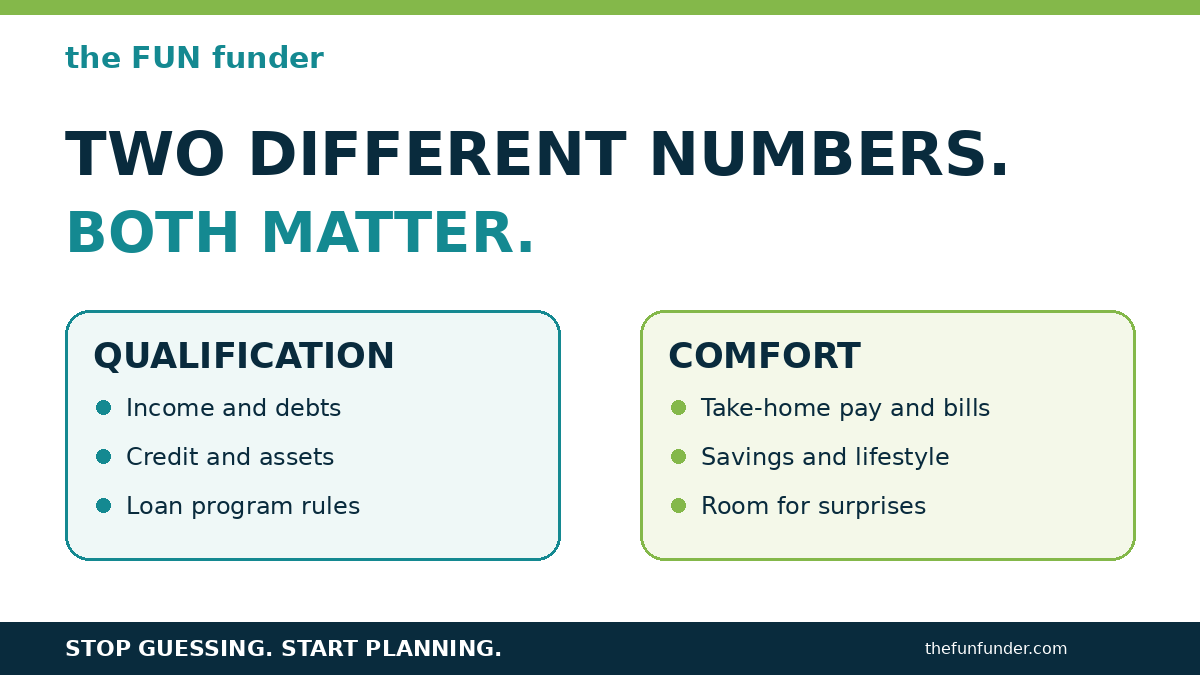
Now we're talking about your comfort number.
This is the amount you can spend on housing while still enjoying your life.
You can pay your bills.
You can save money.
You can handle an unexpected expense.
And you don't get that sinking feeling in your stomach every time the mortgage payment comes due.
Here's an example.
Let's say you qualify for a home with a total monthly housing payment of $3,500.
Awesome. That's what the numbers support under the applicable lending guidelines.
But after looking at your actual household budget, you realize that $2,700 per month feels much more comfortable.
Guess what?
$2,700 is the number I want to start with.
Not $3,500.
Just because you qualify for the higher amount doesn't mean you need to spend it.
Think of your preapproval as a ceiling, not a spending target.
Your comfort number is where we start building the plan.
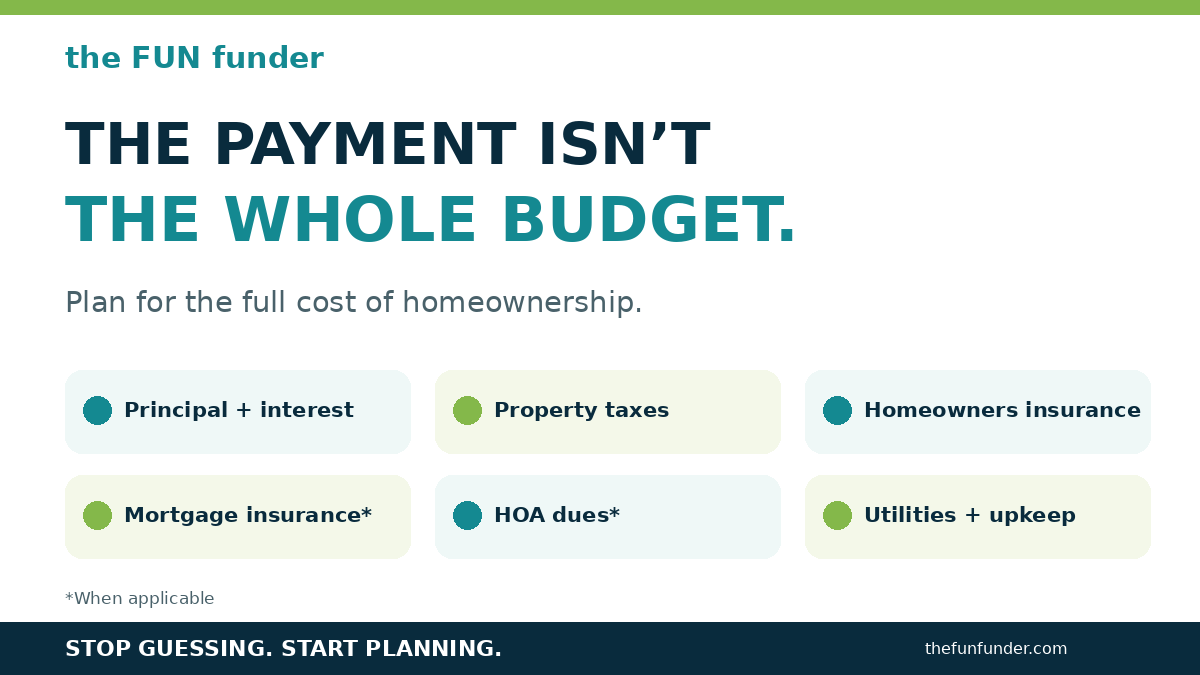
3. Your mortgage payment isn't your entire housing budget
This is where things can get a little sneaky.
You see a house online, plug the price into a mortgage calculator, and think:
"Hey! I can afford that!"
Well... maybe.
But let's make sure we're looking at the whole picture.
Your monthly mortgage payment may include more than just principal and interest.
Depending on the property and loan, you may also have:
Property taxes: These vary by location, assessed value, exemptions and local tax rules.
Homeowners insurance: A necessary expense that can change over time.
Mortgage insurance: May apply depending on your loan program and down payment.
HOA or condominium dues: Some properties have additional association expenses.
And then there are the expenses that aren't necessarily included in your mortgage payment:
Electricity, water, sewer, gas and internet
Lawn care and general maintenance
Appliance repairs and replacements
Unexpected home repairs
Savings for larger expenses, like a future roof or HVAC system
And if you're buying in coastal areas like Charleston or Savannah, insurance considerations can be particularly important. Flood insurance may be required for certain properties or loans, and wind-related coverage deserves attention too.
The goal isn't just to afford the mortgage. It's to comfortably afford the home.
Big difference.
4. Let's put some real numbers behind this
Let's use a hypothetical example.
Imagine a household earning $7,000 per month in gross income.
They also have $1,200 in monthly debt payments.
For illustration, let's assume the applicable mortgage guidelines allow a 45% total debt-to-income ratio.
Here's how that calculation looks:
Monthly budget item | Amount |
|---|---|
Gross monthly income | $7,000 |
Illustrative maximum total monthly debt at 45% DTI | $3,150 |
Existing qualifying monthly debts | −$1,200 |
Remaining room for a qualifying housing payment | $1,950 |
Now, that $1,950 isn't automatically an approved mortgage payment. Actual qualification depends on the loan program, underwriting, credit, assets, property costs and other requirements.
But it demonstrates how a lender might begin evaluating your numbers.
Now let's say this household reviews its real-world expenses and decides that $1,650 per month is a more comfortable total housing payment.
That's valuable information!
Instead of shopping at the very top of what the guidelines might allow, we can build the home search around a budget that actually fits their life.
And that's where smart mortgage planning begins.
5. Start with your payment, not the home's price
This is one of my favorite ways to approach buying a home.
Instead of asking:
"What's the most expensive house I can buy?"
Let's ask:
"What monthly payment would allow me to own a home and still live comfortably?"
Then we work backward.
Here's how:
Step 1: Identify your comfortable monthly housing budget.
Think about your actual take-home pay, monthly spending, savings goals and the lifestyle you want to maintain.
Step 2: Account for the full housing expense.
We need to consider principal, interest, taxes, insurance, applicable mortgage insurance and HOA dues—not just the loan payment.
Step 3: Look at your available down payment and closing costs.
A bigger down payment can change the loan amount and monthly payment, but it isn't always wise to empty your savings account just to put more money down.
Step 4: Build a home price range around those numbers.
Now we can look at realistic purchase prices and financing options.
Step 5: Compare your comfort number with your qualification number.
That's how we identify a buying range that works both on paper and in real life.
No guessing.
No unnecessary surprises.
Just a plan.
6. What happens if mortgage rates change?
Mortgage rates can absolutely change your buying power.
A higher rate generally means a higher principal-and-interest payment on the same loan amount.
A lower rate generally means a lower principal-and-interest payment.
But here's something I tell buyers all the time:
Don't build your entire homebuying strategy around predicting interest rates.
Nobody knows exactly where rates are headed.
And buying a house you can only comfortably afford if rates drop and you refinance later can be a risky move.
Want to understand why mortgage rates move in the first place?
Read my breakdown: Why Did Mortgage Rates Go Up?.
And if you're exploring different ways to manage your initial mortgage payments, you may also want to learn about temporary mortgage buydowns.
Just remember: a temporary payment reduction isn't the same as making a house permanently more affordable.
7. What if you're not quite ready to buy?
Then we make a plan.
Maybe we need to pay down a credit card.
Maybe we need to build your savings.
Maybe we need to adjust your target monthly payment or look at a different price range.
That's not failure.
That's preparation.
And preparation gives you options.
One thing I encourage buyers to do is keep their financial documentation organized as they get closer to applying.
Here's another resource that can help: Keep Your Mortgage File Fresh.
The earlier you understand your numbers, the more control you have over your next move.
The bottom line: Your mortgage should fit your life—not the other way around
Look, getting preapproved is exciting.
And it should be!
But the biggest number on a preapproval letter isn't necessarily the number that will make you happiest.
My job isn't to push you into the most expensive house you can qualify for.
My job is to help you understand your options, make a smart decision, and build a mortgage plan you actually feel good about.
That's the difference between simply getting approved and being prepared.
And that's exactly why I created the Home Readiness Score™.
Stop Guessing. Start Planning.
Wondering how close you are to buying a home?
Start with my Home Readiness Score™.
It takes about 60 seconds and helps you identify where you stand and what your next steps might look like.
Take Your Home Readiness Score™
Want to talk through your numbers personally?
Let's build your Mortgage Map™ and figure out a comfortable path toward homeownership.
Because buying a home should be exciting.
Not something that keeps you up at night wondering how you're going to pay for it.
Josh Catigano
the FUN funder | CMG Home Loans
NMLS #1817426 | Equal Housing Opportunity
I put the FUN in funding!
This article is for general educational purposes only. Debt-to-income calculations are illustrative and do not represent loan approval or eligibility for a particular program. Loan terms, rates, qualifying criteria, property costs and underwriting requirements vary. All loans are subject to credit and underwriting approval. This is not a commitment to lend.